Uncertainty Is Not the Problem.
Pretending It Isn't Is.

Risk management, as a profession, was built on a productive premise: that with enough data, enough models, and enough controls, uncertainty could be measured, bounded, and managed. For decades, this belief worked. It produced risk frameworks, regulatory architectures, stress tests, and scenario analyses that gave organizations — and the professionals who protected them — a sense of command.

"The most consequential risks of the last decade did not emerge from a failure of modelling. They emerged from a failure of adaptability."

The permanent shift in risk management

A global pandemic. Geopolitical fractures that rewrote supply chains overnight. Banking contagion that no internal model caught. AI disruption that rendered entire risk categories obsolete within a single quarter. These events did not arrive despite our frameworks — they arrived precisely where our frameworks did not look. Not because the models were badly built, but because the world changed its rules.

The profession is now divided. On one side: organizations doubling down on the tools of certainty — more comprehensive registers, more granular scenarios, more sophisticated quantitative models. On the other: a growing group of risk leaders who understand something fundamentally different. The greatest risk your organization faces is not the one in your risk register. It is the one your team cannot respond to, because it has spent years optimizing for prediction instead of building for adaptability.

⚠ The Old Game — Breaking Down
Risk = what we can identify, model, and bound
Certainty is the goal of good risk management
Frameworks and controls eliminate exposure
The right response is the pre-planned response
Human judgment is the residual risk to be reduced
✦ The New Game — What Winners Build
Risk = the gap between what you modelled and what happened
Adaptability is the new risk mitigation
Organizational reflexes absorb what frameworks cannot anticipate
The best response is built in the moment, by prepared people
Human judgment is your most critical risk asset

This workshop does not teach you another framework. It trains the human capacity that sits beneath every framework — the ability to listen under pressure, make decisions with incomplete information, accept and work constructively with the unexpected, and build a team that can do the same. These are the skills improvisation has been developing for a century. They are now the skills that risk management demands most urgently.


The Evidence — Why Adaptability Is the New Risk Imperative
69%
of major risk events in the last decade were classified as "unexpected" by the organizations they struck — despite comprehensive risk programmes in place.
· Institute of Risk Management, 2023
Teams that practise adaptive decision-making under simulated uncertainty respond to real crises three times faster with measurably better outcomes.
· Applied Improvisation Network Research
38%
Average increase in team psychological safety — the foundational condition for escalating risk signals early — following applied improvisation programmes.
· HrajSa Programme Data

What You Will Build in This Workshop

Applied improvisation is not performance training. It is the deliberate practice of the exact skills that risk professionals need most when formal processes reach their limits.

Active listening and real-time signal detection under conditions of ambiguity
Decision-making with incomplete or rapidly changing information
Working constructively with unexpected outcomes — the core of crisis response
Building team psychological safety so risk signals get escalated, not buried
Maintaining composure, presence and authority in high-pressure situations
Reframing mistakes as information — the foundation of learning organisations
Trust and cooperation in cross-functional risk governance structures
Communicating uncertainty clearly and confidently to boards and senior leadership

A Day Built on Experience, Not Slides

Every activity is grounded in experiential learning — you practise the skill, then reflect on exactly how it applies to your work in risk. No acting required. No performance pressure. A structured, safe environment that replicates the conditions that matter.

09:00 – 09:30
Opening & Framing: Why Uncertainty Cannot Be Eliminated
The strategic narrative — from prediction-based risk management to adaptability-based risk leadership. Setting the context and group contract.
09:30 – 11:00
Module 1 — Presence Under Pressure
Warm-up exercises and foundational improvisation principles. Practising deep listening, full attention, and reading the room — the same skills that allow early risk signal detection.
11:00 – 11:15
Break
11:15 – 13:00
Module 2 — Yes, And: The Architecture of Adaptive Response
Core improvisation exercises on acceptance and building. How "Yes, And" thinking prevents organisational freezing during unexpected events. Group activities connecting to crisis response and stakeholder management under uncertainty.
13:00 – 14:00
Lunch Break
14:00 – 15:45
Module 3 — Making Decisions in the Dark
Interactive scenarios simulating decisions under incomplete information and time pressure. Building confidence in the face of ambiguity — and learning to communicate uncertainty without losing authority or trust.
15:45 – 16:00
Break
16:00 – 17:00
Module 4 — Group Risk Intelligence
Full-group improvisation activities focused on collective sense-making, trust, and the dynamics that allow organisations to catch what individuals miss. Building teams that surface risk, not suppress it.
17:00 – 17:30
Reflection, Application & Close
Structured debrief connecting the day's practice to each participant's specific professional context. Commitments, takeaways, and next steps.

Built for Risk Professionals Who Work
at the Edge of the Known

No acting experience or improvisation background required. The only prerequisite is working in an environment where uncertainty is a daily operational reality — and where the consequences of poor adaptive response are significant.

Chief Risk Officers & Deputy CROs
Risk Managers & Senior Risk Analysts
Compliance & Regulatory Affairs Leaders
Operational Risk & Resilience Teams
Internal Audit & Assurance Professionals
Enterprise Risk & Governance Teams
Risk Function Leaders in Financial Services
Risk Professionals in cross-functional leadership roles

What You Take Back to the Office on Monday

The goal is not to become a performer. The goal is to become a more adaptive risk leader — one whose team moves with confidence when the risk register runs out of answers.

Practical techniques for making confident decisions under genuine ambiguity — applicable the next day
A new framework for communicating uncertainty to boards, executives, and regulators without losing authority
Stronger team psychological safety — the single strongest predictor of whether risk signals get escalated or buried
Personal resilience and composure tools for high-pressure, high-stakes situations where plans fail
A shared language and experience with your team that accelerates trust and collective response capacity

About HRAJSA

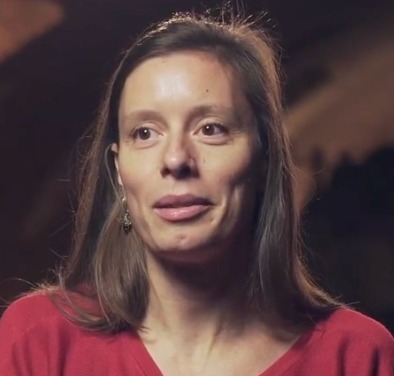
Ivana Krátka
Ivana Krátka
Founder, HrajSa · Applied Improvisation Practitioner

HrajSa is an initiative specialising in applied improvisation for professionals, leadership teams and organisations. We combine principles of improvisational theatre with methods from leadership development, organisational psychology and team collaboration research. Our facilitators work at the intersection of performance practice and professional development — designing experiences that transfer directly to how teams work under uncertainty, pressure and change. We have worked with organisations across financial services, technology, healthcare and the public sector. No previous acting or improvisation experience is required of participants.